
Winter in Quincy hits hard – and your floors take the biggest beating. Between November and March, property owners watch helplessly as salt, slush, and moisture destroy expensive flooring investments. But here's what most people don't realize: a few smart prevention strategies can save you thousands in replacement costs.
The Hidden Winter Floor Destroyers
Salt: The Silent Floor Killer
Rock salt might keep your sidewalks safe, but it's wreaking havoc on your indoor floors. Every footstep tracks in corrosive salt crystals that act like sandpaper on hardwood, tile, and carpet. These tiny abrasives create microscopic scratches that dull finishes and weaken flooring materials over time.
Salt residue also attracts moisture from the air, creating a sticky film that traps dirt and grime. On carpets, this creates those stubborn gray traffic patterns that seem impossible to clean. On hard surfaces, salt leaves behind white, chalky stains that etch into protective coatings.
Moisture: The Floor Foundation Enemy
Illinois winters bring constant freeze-thaw cycles that create moisture problems you can't see. Melting snow seeps through tiny gaps around doors and windows, creating puddles that soak into subflooring. This moisture causes:
- Hardwood planks to cup, warp, and separate
- Laminate edges to swell and lift
- Carpet backing to deteriorate and develop mold
- Tile grout to crack and crumble
Temperature Fluctuations: The Expansion Trap
Your heating system works overtime in winter, creating dramatic temperature swings that make flooring materials expand and contract. This constant movement loosens adhesives, creates gaps between planks, and causes tiles to crack.
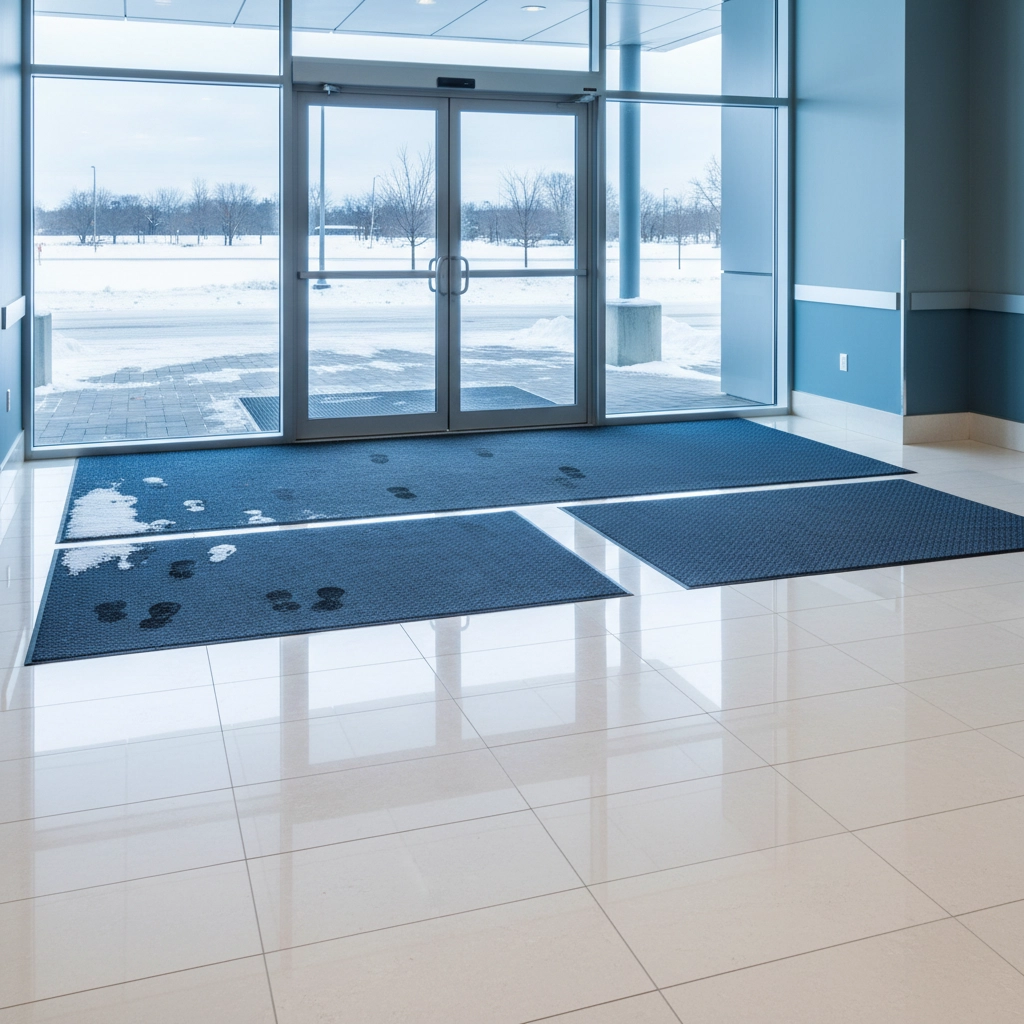
Prevention Strategy #1: Master Your Entryways
Your first line of defense starts at the door. Here's how to create an effective barrier system:
The Three-Mat Rule
Place heavy-duty mats at three key points:
- Outside each entrance (weather-resistant rubber mat)
- Inside the door (absorbent textile mat)
- 6-8 feet inside (final debris-catching mat)
This system forces people to wipe their feet multiple times, removing most salt and moisture before it reaches your main floors.
Boot Station Setup
Create designated areas for removing wet boots and shoes. A simple waterproof tray with towels nearby encourages people to change into indoor footwear. This one step eliminates 80% of winter floor damage.
Daily Mat Maintenance
Wet, dirty mats become part of the problem. Shake out loose debris daily and wash mats weekly during heavy winter weather. Rotate between two sets so you always have dry, clean mats in place.
Prevention Strategy #2: Immediate Response Protocol
The 15-Minute Rule
Salt and moisture cause the most damage in the first 15 minutes after being tracked inside. Train everyone in your building to address spills and wet spots immediately. Keep microfiber towels handy at each entrance for quick cleanup.
Daily Salt Neutralization
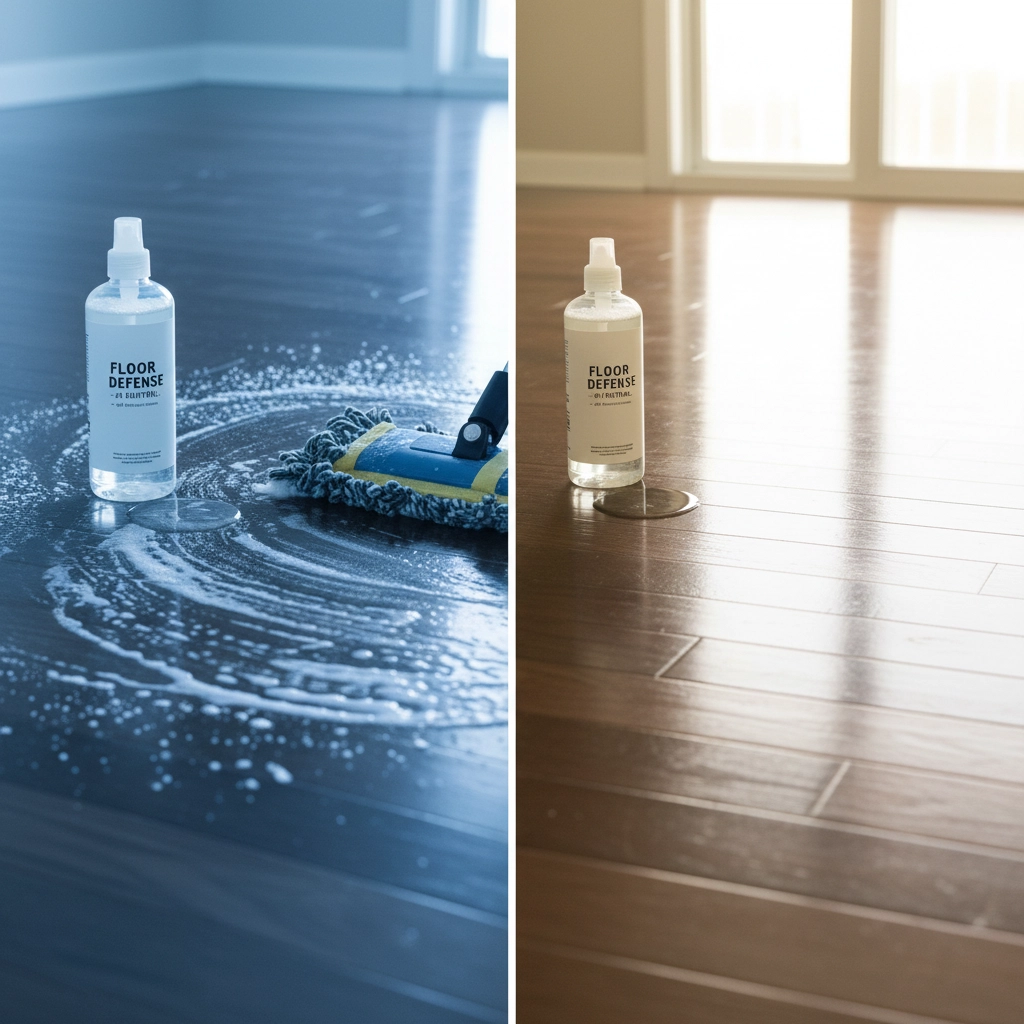
Regular mopping with plain water just spreads salt around. Instead, use a pH-neutral cleaner specifically designed to neutralize salt residue. Mix according to package directions and mop high-traffic areas daily during winter months.
Proper Mopping Technique
- Use two buckets: one for cleaning solution, one for rinse water
- Change water frequently to avoid redistributing dirt
- Work in small sections, rinsing the mop after each area
- Follow up with a clean, damp mop to remove cleaning residue
Prevention Strategy #3: Environmental Controls
Humidity Management
Winter heating systems create desert-dry conditions that make floors brittle and prone to cracking. Maintain indoor humidity between 30-50% using:
- Whole-house humidifiers
- Portable units in problem areas
- Strategic placement of water bowls near heat sources
Temperature Consistency
Avoid dramatic temperature swings by:
- Setting thermostats to consistent temperatures (don't let buildings get too cold overnight)
- Using ceiling fans to circulate air evenly
- Sealing gaps around windows and doors to prevent drafts
Proper Ventilation
Good air circulation prevents moisture buildup that leads to mold and mildew. Run bathroom exhaust fans longer in winter and crack windows periodically during mild days to refresh stale air.
Prevention Strategy #4: Professional Protective Treatments
Concrete Sealing
Untreated concrete floors in commercial spaces absorb salt and moisture like sponges. Professional protective coatings create a non-porous surface that:
- Resists salt penetration
- Prevents freeze-thaw damage
- Makes cleaning easier and more effective
- Extends floor life by 5-10 years
Hardwood Refinishing
A fresh protective finish before winter creates a barrier against moisture and salt. Professional-grade polyurethane coatings provide superior protection compared to DIY products.
Carpet Protection
Commercial-grade carpet protection treatments create an invisible barrier that repels moisture and makes salt removal easier during routine cleaning.
When DIY Isn't Enough: Professional Floor Care Solutions
Sometimes prevention isn't enough. If you're seeing these warning signs, it's time to call in the professionals:
- White salt stains that won't come clean
- Hardwood planks starting to cup or separate
- Carpet traffic patterns that resist cleaning
- Grout lines turning dark or crumbling
- Persistent musty odors from moisture damage
Easy Clean Pros' Winter Floor Care Program
Our floor care Quincy IL specialists understand local winter challenges. We've developed specific protocols for dealing with Illinois salt damage and moisture problems.
Vetted, Professional Cleaners
Every Easy Clean Pros team member passes background checks and extensive training on proper winter floor care techniques. We don't just clean – we protect your flooring investment.
Flat-Rate Pricing
No surprises or hidden fees. Our transparent pricing means you know exactly what you'll pay before we start work.
Easy Online Booking
Schedule cleaning services Quincy IL in minutes through our simple online system. Choose one-time deep cleaning or regular maintenance programs.

The Cost of Waiting
Delaying proper winter floor care leads to expensive repairs:
- Hardwood refinishing: $3-8 per square foot
- Carpet replacement: $2-5 per square foot
- Tile and grout repair: $5-15 per square foot
- Subfloor replacement: $10-25 per square foot
Compare that to preventive commercial cleaning service Quincy IL programs that cost a fraction of replacement expenses.
Emergency Winter Floor Care
Salt Stain Removal
For immediate salt damage control:
- Mix 1 cup white vinegar with 1 gallon warm water
- Apply with microfiber mop, working in small sections
- Rinse with clean water and dry immediately
- Never use vinegar on natural stone floors
Water Damage Response
If you discover standing water or moisture damage:
- Remove standing water immediately with wet/dry vacuum
- Set up fans and dehumidifiers for rapid drying
- Document damage with photos for insurance
- Call professionals within 24-48 hours to prevent mold
Carpet Emergency Care
For salt-damaged carpets:
- Vacuum thoroughly to remove loose salt crystals
- Mix 1/4 cup white vinegar with 1 cup warm water
- Apply sparingly with spray bottle and blot (don't rub)
- Rinse with clean water and blot dry
- Use fans to speed drying process
Planning Ahead: Spring Floor Recovery
Even with perfect prevention, winter takes a toll. Plan spring floor recovery projects now:
- Professional deep cleaning in March/April
- Hardwood refinishing after humidity stabilizes
- Carpet deep cleaning before summer humidity
- Grout resealing and tile repair
- Concrete resealing for next winter's protection
Don't let another Illinois winter destroy your floors. The prevention strategies outlined here will protect your investment and save thousands in repair costs. For properties that need professional attention, Easy Clean Pros provides expert floor care Quincy IL services with transparent pricing and reliable results.
Ready to protect your floors from winter damage? Contact Easy Clean Pros today for a consultation and see why Quincy property owners trust us with their most valuable flooring investments.