
Winter's almost here, and if you own a business in Quincy, you know what that means: salt trucks, tracked-in slush, and those dreaded white streaks across your beautiful floors. But here's what most business owners don't realize: those seemingly harmless salt crystals are quietly racking up thousands in damage costs every single winter.
We've seen local restaurants, offices, and retail shops shell out $3,000 to $8,000 every spring just to repair salt damage that could've been prevented with the right approach. The worst part? Most of these costly repairs happen because of five simple mistakes that are completely avoidable.
Why Salt Damage Hits Quincy Businesses So Hard
Let's be real: Quincy winters don't mess around. Between November and March, our sidewalks and parking lots get hit with rock salt, calcium chloride, and other ice melts that keep people safe but wreak havoc on your floors.
Here's the thing: salt isn't just messy. It's chemically aggressive. When customers and employees track it inside, those tiny crystals act like sandpaper on your flooring. Every step grinds salt deeper into surfaces, scratching hardwood, eating through sealants, and turning your professional space into a maintenance nightmare.
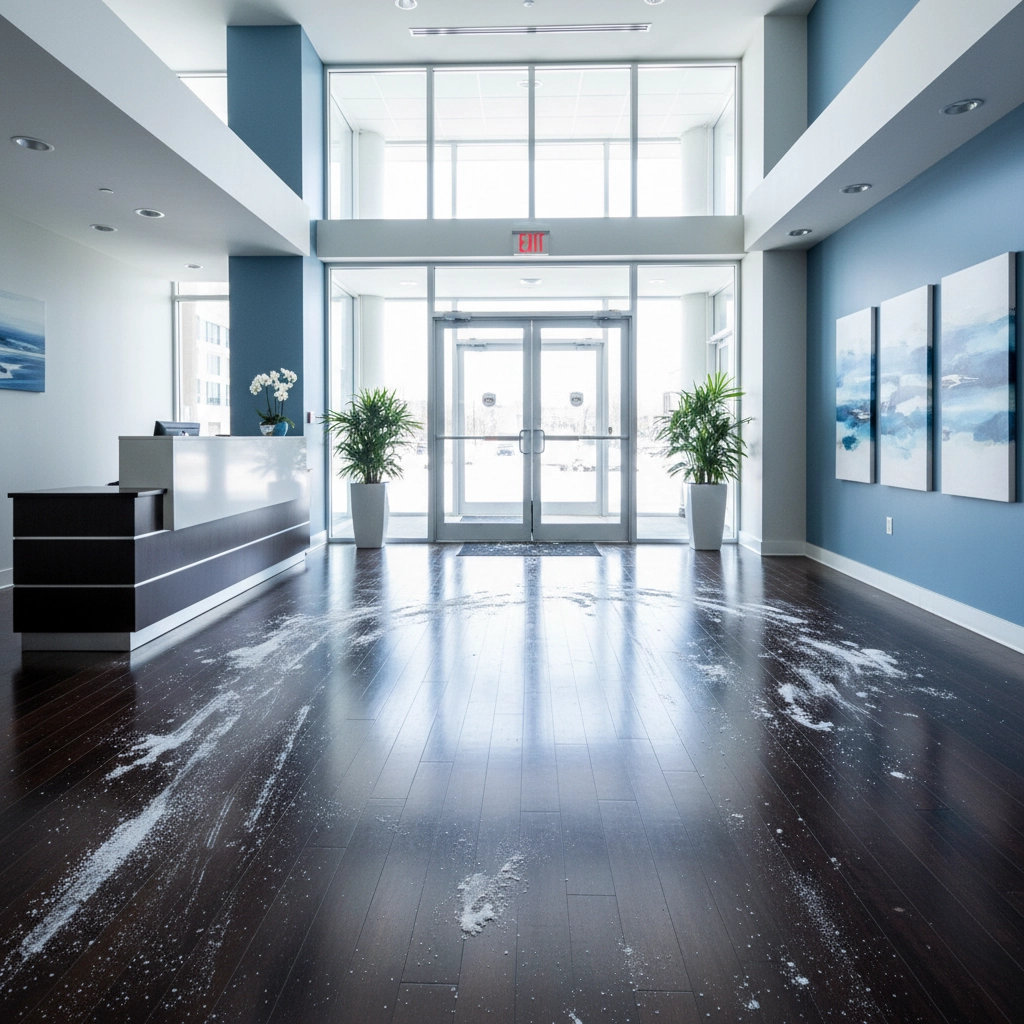
The damage compounds daily. What starts as minor scuffing in December becomes deep scratches by February and full-blown floor replacement bills by April. We've watched business owners go from "it's just a little salt" to "how much does new flooring cost?" in a single winter season.
Mistake #1: Thinking Standard Mopping Gets the Job Done
This is the big one. About 80% of Quincy business owners we talk to think their regular cleaning routine can handle salt residue. Spoiler alert: it can't.
Standard mops and everyday cleaners just spread salt water around, leaving a thin film that dries into those white, chalky streaks you see everywhere. Even worse, wet mopping without removing the salt crystals first just creates an abrasive slurry that accelerates floor damage.
The Pro Fix: Always dry sweep or vacuum first to remove salt crystals, then use a pH-neutral cleaner specifically designed for salt removal. Regular floor cleaners aren't acidic enough to break down mineral deposits effectively.
Mistake #2: Skipping Entry Mat Systems (Or Using Cheap Ones)
We get it: good commercial mats are an investment. But here's some quick math: a quality mat system costs around $200-500. Floor refinishing? Try $15-25 per square foot. For a typical 1,000 square foot retail space, you're looking at $15,000+ in refinishing costs.
The cheap mats from big box stores don't cut it either. They're too thin, shift around, and can't absorb the volume of moisture and salt that Quincy winters throw at your entrance.
The Pro Fix: Install a three-zone mat system: scraper mats outside, absorption mats in the transition zone, and finishing mats inside. Change or clean them weekly during peak winter months.

Mistake #3: Waiting Too Long Between Professional Cleanings
Here's where we see businesses really shoot themselves in the foot. Summer cleaning schedules don't work in winter. That monthly or bi-weekly professional cleaning that works great in July becomes totally inadequate when salt season hits.
Salt damage is progressive: it gets exponentially worse the longer it sits. A floor that looks "okay" after a week of salt exposure might already have microscopic damage that'll show up as major problems later.
The Pro Fix: Double your professional cleaning frequency from November through March. If you normally get monthly service, switch to bi-weekly. Weekly clients should consider twice-weekly during the worst weather periods.
Mistake #4: DIY Floor Restoration Projects
We love a good DIY spirit, but winter floor damage isn't the place to experiment. We've seen so many business owners try to "buff out" salt damage themselves or use home remedies they found online.
The problem is that salt damage often looks surface-level when it's actually penetrated deep into the floor finish or even the wood itself. DIY fixes can actually seal in damage, making professional restoration much more expensive later.
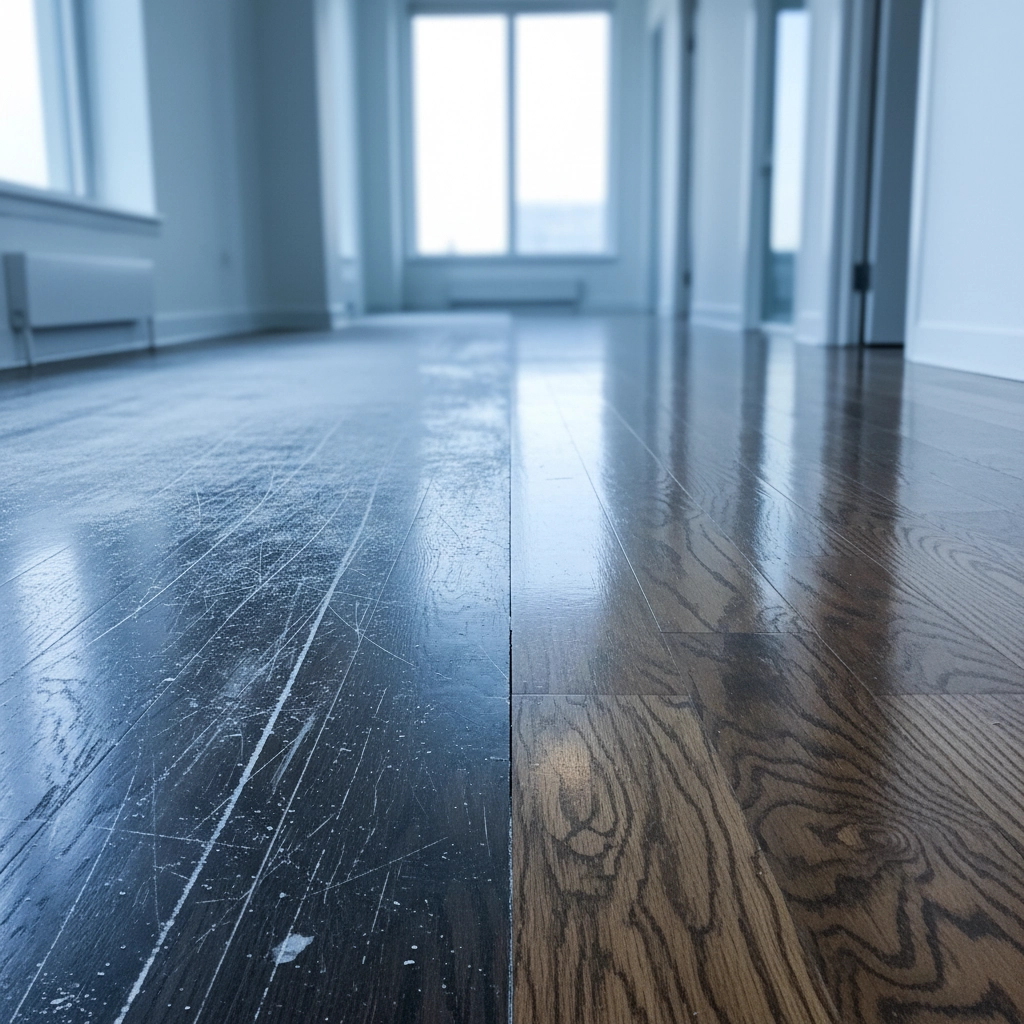
The Pro Fix: Call in professionals at the first sign of salt damage. Early intervention can often restore floors for a few hundred dollars instead of thousands later.
Mistake #5: Ignoring High-Traffic Areas
Not all areas of your business get hit equally hard by salt. The path from your entrance to the counter, break room, or bathroom sees way more salt traffic than corners or display areas.
But most businesses clean everything the same way, which means high-traffic areas don't get the extra attention they need while low-traffic areas get over-cleaned (wasting time and money).
The Pro Fix: Map out your salt traffic patterns and clean accordingly. High-traffic zones might need daily attention, while other areas can stick to your regular schedule.
Pro Hacks That Save Money Long-Term
After cleaning hundreds of Quincy businesses through winter seasons, we've picked up some insider tricks that can slash your salt damage costs:
The Humidity Hack: Keep indoor humidity between 30-50% during winter. Salt pulls moisture from flooring materials, and proper humidity levels slow this process significantly.
Strategic Timing: Schedule your heaviest cleaning right before and after major snowstorms. This prevents salt buildup during peak damage periods.
The Seal Check: Test your floor sealant annually. A simple water drop test (if water beads up, you're good; if it soaks in, you need resealing) can prevent thousands in damage.
Staff Training: Teach your team to spot early salt damage signs: white residue, rough texture, or dulling finish. Early detection saves major money.

How Easy Clean Pros Protects Your Investment
Look, we're not going to pretend that professional commercial cleaning service Quincy IL is cheap. But when you break down the math, it's a fraction of what you'll spend on floor replacement.
Our winter floor care program specifically targets salt damage prevention. We use commercial-grade equipment and pH-balanced cleaners that actually remove salt residue instead of just moving it around. Plus, we adjust our cleaning protocols based on weather conditions: more frequent service during heavy salt periods, deep restoration treatments in spring.
The biggest advantage? We catch problems early. Our team knows what salt damage looks like in its early stages, when it's still fixable for a few hundred dollars instead of thousands.
What makes our floor care Quincy IL different:
- Salt-specific cleaning protocols developed for Illinois winters
- Commercial-grade extraction equipment that pulls salt from deep in floor pores
- Flexible scheduling that ramps up during peak winter weather
- Annual floor protection treatments that create salt-resistant barriers
- Emergency response for major weather events
The Bottom Line for Quincy Business Owners
Winter salt damage isn't inevitable: it's preventable. But only if you take the right approach from day one.
The businesses that avoid those $3,000+ spring repair bills all do the same things: they invest in proper entry systems, increase cleaning frequency during winter months, use the right products and techniques, and work with experienced cleaners Quincy IL who understand local winter challenges.
Ready to protect your floors this winter? Get in touch with our team for a free assessment of your current winter cleaning plan. We'll walk your space, identify potential problem areas, and show you exactly how to avoid becoming another expensive spring repair statistic.
Your floors (and your budget) will thank you.